Power over Ethernet, commonly called PoE, allows an Ethernet cable to carry electrical power and network data at the same time. PoE is commonly used for devices that need a network connection but are installed in locations where a standard electrical outlet may be unavailable or inconvenient.
Instead of running one cable for data and another cable for power, a technician can connect a supported device using a single Ethernet cable. This simplifies installation, reduces wiring requirements, and allows network devices to be powered from a central location.
CompTIA A+ technicians should understand how PoE works, recognize PoE switches and injectors, identify common PoE-powered devices, and troubleshoot situations in which a switch does not have enough available power.
Power over Ethernet Fundamentals
A standard Ethernet connection carries network data between devices. A PoE connection adds direct-current electrical power to the same twisted-pair Ethernet cable.
The device supplying power is called the power-sourcing equipment, or PSE. A PoE-capable network switch is a common example of power-sourcing equipment.
The device receiving power is called the powered device, or PD. Examples include wireless access points, VoIP phones, security cameras, door-access systems, and Internet of Things devices.
A typical PoE connection follows this path:
PoE switch → Ethernet cable → powered network device
The Ethernet cable carries both data and electrical power. The connected device does not need a separate power adapter as long as the switch, cable, and powered device support compatible PoE standards.
Before supplying power, standards-based PoE equipment normally checks whether the connected device supports PoE. The power-sourcing equipment and powered device then determine the appropriate power level.
This negotiation process helps protect ordinary Ethernet devices that do not require power. A standards-compliant PoE switch should not simply apply full power to every connected device.
Practical Uses for PoE
PoE is especially useful for network devices mounted on ceilings, walls, poles, entrances, and other areas where installing electrical outlets would be difficult or expensive.
Wireless Access Points
Wireless access points are often installed on ceilings or high on walls to provide better wireless coverage. Running a separate electrical circuit to every access point would increase installation cost and complexity.
With PoE, one Ethernet cable connects the access point to a PoE switch. The cable provides both the network connection and the electrical power needed to operate the access point.
Modern access points may require higher PoE power levels when they contain multiple radios, additional antennas, USB ports, or advanced wireless features.
VoIP Phones
Voice over Internet Protocol phones connect to an organization’s data network instead of using a traditional analog telephone line.
A PoE switch can power the phone through its Ethernet connection. This removes the need for a separate power adapter at every desk.
Many VoIP phones include a second Ethernet port that allows a computer to connect through the phone. The phone receives power from the switch while providing network access to both the phone and the attached computer.
Security Cameras
IP security cameras transmit video through an Ethernet network. Cameras are often installed on ceilings, exterior walls, parking structures, or other locations without nearby electrical outlets.
PoE allows a single cable to provide the camera’s data connection and power. This makes installation simpler and allows the cameras to receive centralized backup power if the PoE switch is connected to an uninterruptible power supply.
Some cameras require more power for features such as infrared lighting, heaters, fans, motorized lenses, or pan-tilt-zoom controls.
Door-Access Systems
Electronic door-access systems may use PoE to power card readers, keypads, intercoms, controllers, and network-connected locks.
Using PoE reduces the number of cables that must be installed near an entrance. It may also allow the organization to monitor and restart access-control equipment remotely through the network.
Because door-access systems affect physical security, technicians should carefully verify power requirements, backup-power plans, and manufacturer specifications.
IoT Devices
Internet of Things devices include network-connected sensors, displays, lighting controllers, environmental monitors, clocks, intercoms, and automation equipment.
Some IoT devices use PoE because they need reliable wired connectivity and continuous power. A single cable can connect the device to the network while powering it from a centrally managed switch.
The amount of power required depends on the device. A small sensor may use very little power, while a display, controller, or advanced automation device may require a higher-power PoE standard.
PoE Injectors
A PoE injector adds electrical power to an Ethernet connection when the existing network switch does not support PoE.
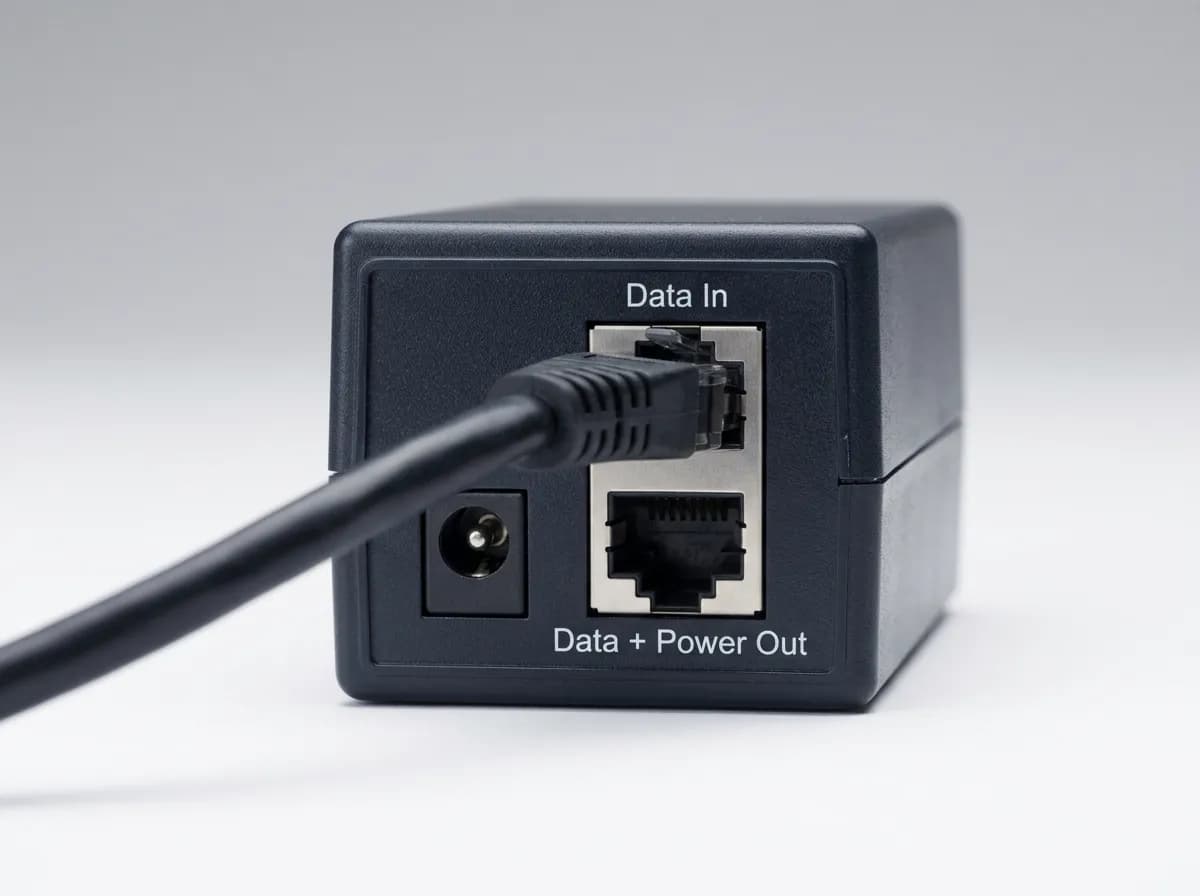
The injector is placed between the non-PoE switch and the powered device.
The connection normally follows this path:
Non-PoE switch → Ethernet cable → PoE injector → Ethernet cable → powered device
The injector receives network data from the switch and electrical power from a wall outlet. It combines the data and power onto the cable leading to the powered device.
PoE injectors are commonly used when only one or a small number of devices require PoE. For example, a small office may use a standard network switch but need to power one wireless access point.
An injector can provide PoE without requiring the organization to replace the entire switch.
Advantages of PoE Injectors
A PoE injector is relatively simple to install and may be less expensive than purchasing a new PoE switch when only one device needs power.
Injectors can also be useful for temporary installations, testing, or situations in which a single high-power device requires a different PoE standard than the switch supports.
Limitations of PoE Injectors
Each injector normally requires its own electrical outlet and cable connections. Using many separate injectors can create clutter and make the network more difficult to manage.
Injectors also distribute power from multiple individual locations rather than from one centrally managed switch. This can make monitoring, troubleshooting, and backup power more complicated.
PoE Switches
A PoE switch is a network switch with built-in power-sourcing capabilities. It can provide network connectivity and electrical power directly through its Ethernet ports.
The connection is simpler than an injector-based installation:
PoE switch → Ethernet cable → powered device
PoE switches are commonly used when an organization needs to power multiple access points, phones, cameras, or other network devices.
Advantages of PoE Switches
A PoE switch centralizes network connectivity and power distribution. Multiple powered devices can connect directly to one switch without requiring separate injectors.
Many managed PoE switches allow technicians to view the power consumption of each port. A technician may also be able to enable, disable, prioritize, or restart PoE power remotely.
Centralized power makes backup power easier to provide. Connecting the PoE switch to an uninterruptible power supply can keep multiple phones, access points, cameras, or access-control devices operating during a short power outage.
Limitations of PoE Switches
PoE switches are generally more expensive than comparable non-PoE switches. They also generate additional heat because they must provide electrical power to connected devices.
A PoE switch has a limited power budget. Even when every port supports PoE, the switch may not be able to provide the maximum possible power to every port at the same time.
Technicians must evaluate the switch’s total power capacity in addition to the number of available Ethernet ports.
PoE Injectors Compared with PoE Switches
A PoE injector is generally best when power must be added to one or a few Ethernet cables.