
What is Tower Density?
Tower density is a crucial factor that determines the accuracy and performance of cellular location services. It refers to the number of cellular towers or base stations deployed within a specific geographic area. The more cell towers that are present, the higher the tower density, and the more accurate the cellular positioning can be.
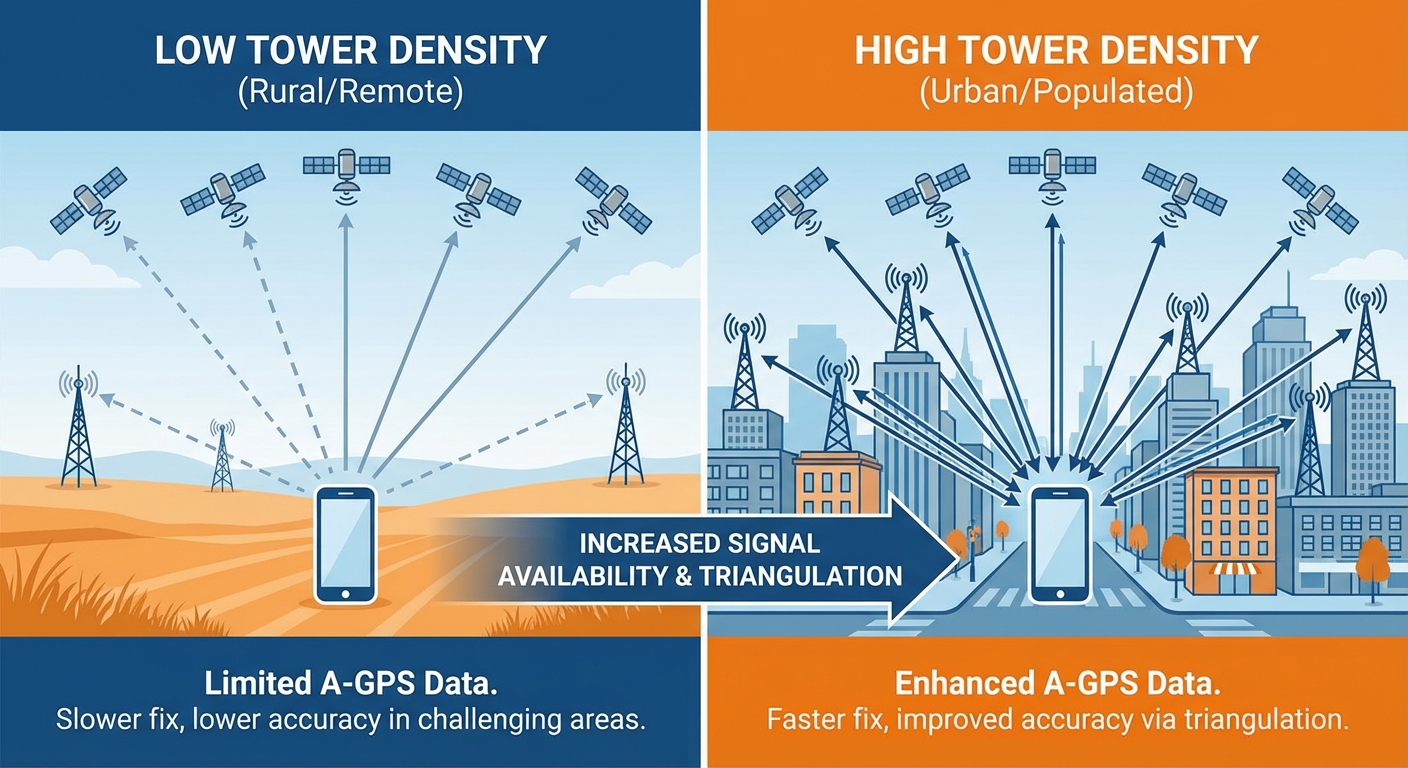
How Tower Density Affects Cellular Location
Cellular location services, such as those used by smartphones and mobile devices, rely on analyzing the signals between the device and nearby cell towers to estimate the device's position. With a higher tower density, the device can receive signals from more towers, allowing for more precise trilateration and triangulation calculations to determine the device's location.
Accuracy Levels Based on Tower Density
- Urban Areas: In dense urban environments with a high concentration of cell towers, the tower density is typically very high, resulting in location accuracy of around 50-300 meters.
- Suburban and Rural Areas: In less populated suburban and rural areas, the tower density is often much lower, leading to lower location accuracy, typically ranging from 1-10 kilometers or more.
Factors Affecting Tower Density
The tower density in a given area is influenced by several factors, including:
- Population Density: Areas with higher population density, such as cities, generally have a greater concentration of cell towers to serve the larger number of users.
- Terrain and Geography: Mountainous, forested, or other challenging terrain may require more cell towers to provide adequate coverage and signal strength.
- Network Technology: Newer cellular technologies, such as 5G, often require a denser network of smaller cell sites to achieve the desired performance and coverage.
- Network Operator Strategies: Cellular network operators may strategically deploy cell towers based on factors like subscriber density, competition, and infrastructure costs.
Importance of Tower Density
Tower density is a critical consideration for IT professionals responsible for configuring, troubleshooting, and securing mobile devices and cellular networks. Understanding the tower density in a given area can help predict the accuracy and reliability of cellular location services, which are essential for a wide range of applications, from navigation and emergency services to location-based marketing and asset tracking.
Optimal tower density is a key factor in ensuring accurate and reliable cellular positioning, particularly in areas with significant population or geographic challenges.